The Smoking Room at the End of My Driveway
From The Desk | The Gentlemen's Study
There is a chair on my back patio that knows things about me.
Not literally, of course. But if you want to understand a man — the version of him that exists when the performance stops and the obligations fall quiet — you could do worse than to spend some time in the space he retreats to when the day is finally his.
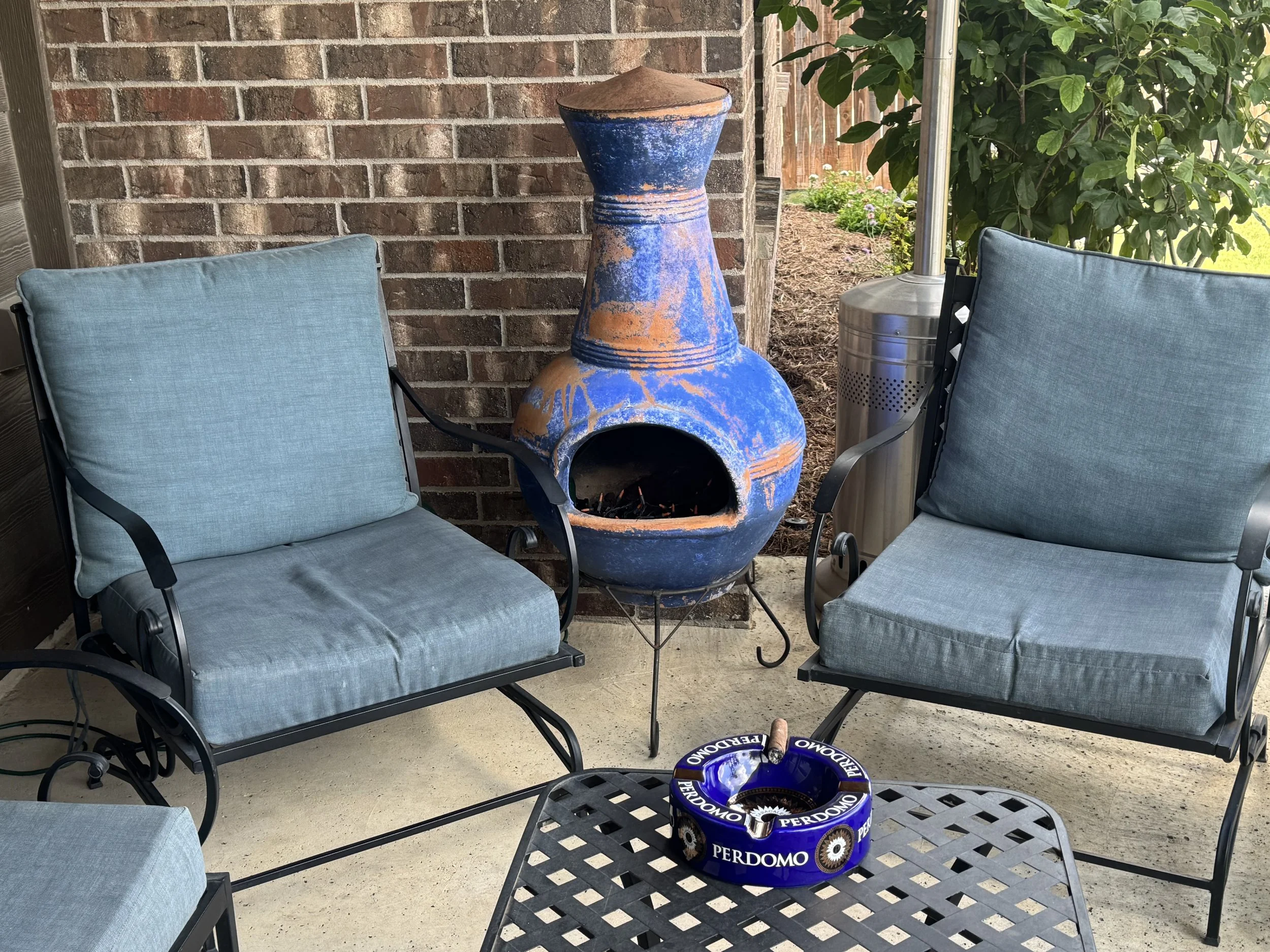
Mine is a back patio in North Texas. Nothing elaborate. Nothing designed to impress. A chair, a small table, and on the right kind of evening, something worth smoking and something worth thinking about.
It is, without question, my favorite place in the world.
A Thread I Didn't Know I Was Pulling
I did not always understand why the patio mattered so much to me. I knew I valued the time. I knew it was where I decompressed most fully, where the noise of a long shift finally fell away, where something quieter could surface and be heard.
But I did not have a framework for what was actually happening in those hours until I started researching Episode 2 of The Gentlemen's Study — the episode on the history of cigars, spirits, and gentleman's culture.
What I found changed how I understood my own patio.
The research took me back further than I expected. To the Taíno people of the Caribbean, who greeted Columbus's ships with gifts of tobacco leaves — leaves that Columbus's men threw away, not yet understanding what they had been given. To the pipe circles of the Plains nations, where sharing a smoke was a covenant — a ritual that marked time as set apart, that sealed agreements, that said this moment is different from the ordinary moments before and after it.
To the coffeehouses of Restoration London, where a penny bought any man a seat at the table and a pipe to smoke while he argued about ideas with whoever happened to be present. Where Lloyd's of London was born. Where the London Stock Exchange began. Where the institutional architecture of modern commerce grew out of accumulated conversations between men sitting in leather chairs with tobacco smoke thick in the air.
To the Victorian gentlemen's club — the smoking room in particular — where the real conversation began after the formal dinner ended. Where the servants had withdrawn and the port decanter was making its way around the table and the cigars were lit and the men who ran the British Empire finally said what they actually thought.
A thread runs through all of it. Across centuries and cultures and continents — men have always needed a space set apart from ordinary time. A place where the armor comes off. Where the performance stops. Where honest conversation becomes possible because the usual social defenses have been laid aside.
I looked at my back patio differently after that.
What the Patio Actually Is
My patio is my smoking room.
Not in the Victorian sense. There is no dark paneling, no leather wingback chairs, no decanter making its way around a mahogany table. But in the essential sense — the one that has survived every change of era and culture — it is exactly that.
It is the space where the day ends and something else begins.
There is a ritual to it that I have come to take seriously. The deliberate selection of the evening's cigar. The careful cut. The lighting — done properly, unhurried, the way it deserves to be done. These small actions are not incidental. They mark the transition. They say to the part of your brain that is still running through the day's unfinished business: that is done. This hour is different. Pay attention.
The same is true of whatever is in the glass. Not because the drink itself is the point — but because the act of pouring something worth drinking and sitting down with it communicates something to yourself. An acknowledgment that the day has earned its end. That the man who never stops is not more virtuous than the man who knows when to sit down. He is simply more depleted.
I have come to believe that decompression is not weakness. It is maintenance. And the man who never maintains himself eventually has nothing left to give the people who depend on him.
What Happens in the Quiet
The patio is where I do some of my clearest thinking.
Not the urgent kind — the problem-solving, the planning, the list-making that occupies most of a working man's mental bandwidth during the day. That thinking happens at the desk, in the car, during the shift. The patio is for something different.
The kind of thinking that only happens when you stop trying to think. When you simply sit with what is already there.
Questions surface that the noise of the day crowds out. Convictions clarify. Things that seemed tangled in the afternoon have a way of unknotting themselves in the quiet of an evening with something good burning slowly in the ashtray.
I am convinced this is not accidental. There is something about genuine stillness — the deliberate, protected, unhurried kind — that the soul requires and rarely receives. We were not built for constant stimulation. We were built for rhythms. Work and rest. Noise and quiet. The active and the contemplative.
The back patio enforces the rhythm. It is hard to be in a hurry when you are smoking a cigar that demands an hour of your unhurried attention.
The Conversations Worth Having
One of the things I value most about cigar culture is what it does to conversation.
There is something about two men sitting together with good cigars that changes the register of what gets said. The shared ritual — the lighting, the unhurried pace, the understanding that neither of you is going anywhere for the next hour — creates the conditions for conversations that do not happen in most settings.
Not the surface conversation. Not the exchange of information and opinions that passes for conversation in most of modern life. The deeper kind. Where something real gets said. Where a man tells you what he is actually carrying rather than what he wants you to think he is carrying.
I have had some of the most important conversations of my life on a patio with a cigar in my hand. With my sons. With old friends. With men I had only just met but who turned out to have something worth saying. Those conversations did not happen over text messages. They did not happen in a conference room. They happened in a space set apart — in unhurried time, around something worth sharing.
The Victorian gentlemen understood this about their smoking rooms. The men of the London coffeehouses understood it about their penny admissions and their pipe smoke and their hours of argument. Some conversations require a particular setting. And the setting requires intention.
Your Smoking Room
I want to say something practical before I close — because I think the historical framing can make this feel like it belongs to another era or another kind of man.
It does not.
Your smoking room does not need dark paneling or leather wingback chairs. It does not need to be indoors or formally appointed or any particular size. It needs to be yours — a space you have claimed, a time you have protected, a ritual you have built around the deliberate act of stopping.
A back porch in Texas. A garage with a decent chair and a good lamp. A corner of the yard where the neighbor's noise does not reach. Whatever space you can find and protect — that is enough.
What matters is the intention you bring to it. The decision that this hour belongs to something other than productivity. That the man who sits here is not available for the urgencies that will always present themselves if you let them.
Because here is what I have learned from my patio — and from the history of men who understood this long before I did:
The thread that runs from the pipe circles of the Americas to the coffeehouses of London to the smoking rooms of Pall Mall runs straight to wherever you choose to sit down and be fully present.
You are not just enjoying a cigar on a Tuesday evening.
You are participating in something that has mattered to men for a very long time.
Pull up a chair. You're welcome here.
— Keith