
The Bookshelf
A curated reading list from The Gentlemen's Study
A gentleman reads.
Not to appear intelligent. Not to accumulate titles he can mention in conversation. But because the man who reads seriously is building something — a mind that thinks carefully, a foundation of conviction that holds under pressure, an interior life worth having.
Every book on this shelf has been read. Marked up. Lived with. These are not recommendations borrowed from a best-of list or chosen for their cultural cachet. They are books that did something — that shifted how I see something, confirmed what I already believed with new clarity, or asked a question I hadn't thought to ask.
Some of them will appear in The Study Close at the end of an episode. Some arrived quietly and stayed. All of them are worth your time.
This shelf will grow as I read. Come back to it.
And if something here finds its way into your hands — I hope it does for you what it did for me.
— Keith
This page contains affiliate links. If you purchase a book through one of these links The Gentlemen’s Study may earn a small commission at no additional cost to you. I only recommend books I have personally read and genuinely believe are worth your time.
-
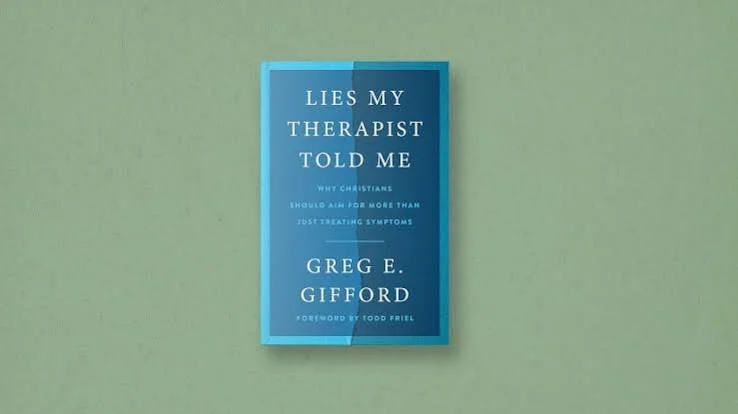
Lies My Therapist Told Me
by Greg Gifford
Recommended on Episode 19—Temperance
In Lies My Therapist Told Me, biblical counselor Greg Gifford challenges Christians to think more carefully about many of the assumptions that have become commonplace in modern mental-health culture.
Central to the book is an important distinction between the brain and the mind. The brain is a physical organ capable of disease and injury; the mind, Gifford argues from a biblical perspective, concerns the inner person—our thoughts, beliefs, desires, and motives. He examines what happens when those categories are blurred and problems of the mind are approached primarily through a medical framework.
Gifford's conclusions won't receive universal agreement, but that's part of what makes the book worthwhile. It asks Christians to examine terminology and assumptions we often accept without much thought and to consider what Scripture says about the mind, counseling, and genuine transformation.
Thought-provoking, challenging, and distinctly Christian, this is a book worth reading carefully rather than quickly.
-

The Chronicles Of Narnia
C.S. Lewis
Recommended in Episode 17 — GenerosityI'll be honest — there's no tidy connection between this recommendation and the episode it's attached to. I just finished reading through the entire series again recently, and it's too good not to share while it's still fresh.
If you haven't picked these up since you were a kid, or never read them at all, they hold up far better as an adult than most people expect going in. Underneath the wardrobes and talking animals is a body of moral and theological substance that most of their reputation as "children's literature" doesn't prepare you for — sacrifice, temptation, courage, resurrection, the whole shape of the Christian story told sideways, through a country most of us fell in love with before we ever understood what it was actually about.
Read them to your kids or grandkids if you've got them. Read them for yourself either way. Lewis wrote them to work on more than one level at once, and most of us only caught the first one the first time through.
-
The Idea Machine
by Joel Miller
Recommended in Episode 16 — Sincerity
This book isn't about sincerity. It's about the history of the book itself as a technology — how it shaped human thought for over two thousand years, from ancient Athens through monks and militaries, revolutions and the Renaissance, all the way to the questions we're asking right now about AI and whether reading still matters. Miller makes the case that books didn't just record ideas. They built the world we actually live in, and they still have something urgent to teach us as we head further into an era that seems determined to render them obsolete.
This is exactly the book I would have recommended back when we talked about why men need to read again. I just hadn't finished it yet. And I've never recommended a book on this show I hadn't actually read myself — so here it is now, a little out of order, because it's too good to keep sitting on.
-
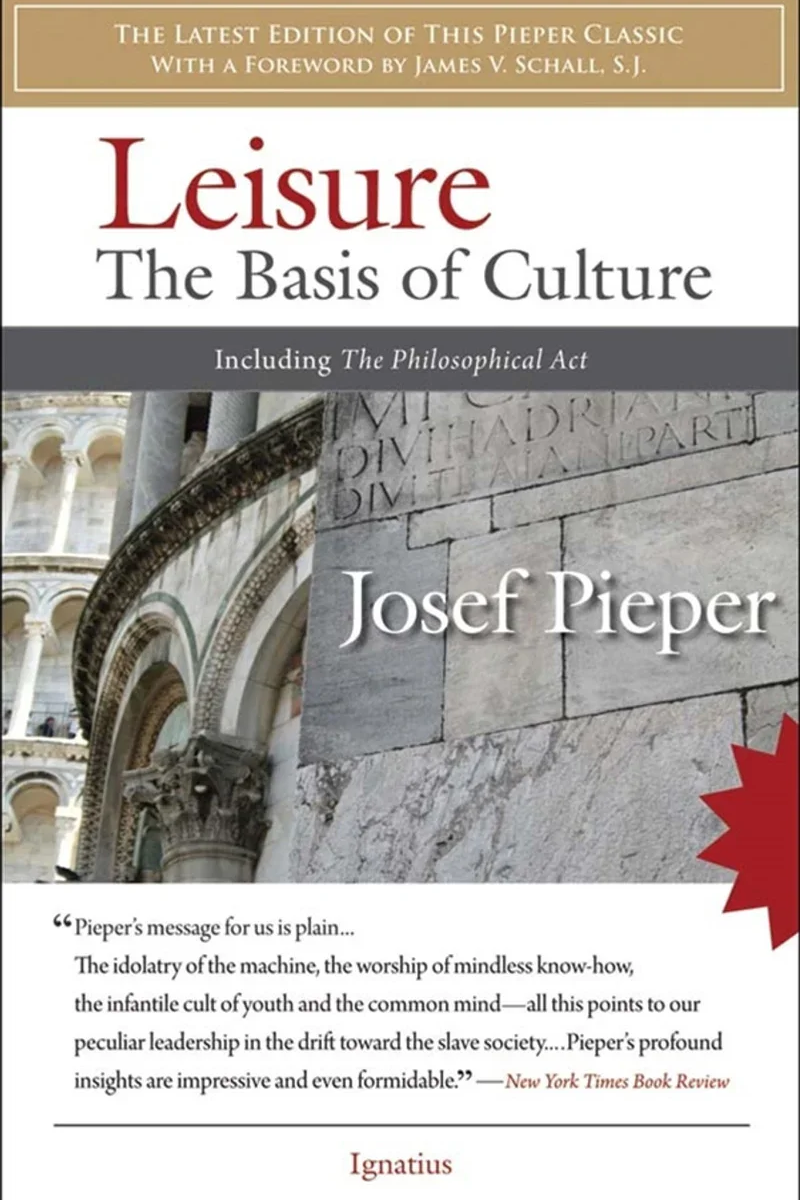
Leisure: The Basis of Culture
by Josef Pieper
Short. Dense. Foundational.
You can read this book in an afternoon and spend the next year thinking about it. Pieper makes an argument that cuts against almost everything the modern world assumes — that genuine culture, genuine human flourishing, requires a particular kind of leisure. Not passive entertainment. Not escape. But the contemplative engagement with what is true and beautiful and good.
In an age that has reduced a man's private hours to a choice between productivity and consumption, Pieper insists there is a third option. The unhurried engagement with ideas and beauty that is not laziness but the deepest form of human activity.
This is the philosophical foundation for everything The Gentlemen's Study is built around. The patio. The cigar. The good book. The conversation worth having. Pieper gives you the intellectual framework for why those things matter — not as indulgences but as necessities.
If you only read one book from this shelf, read this one.
-
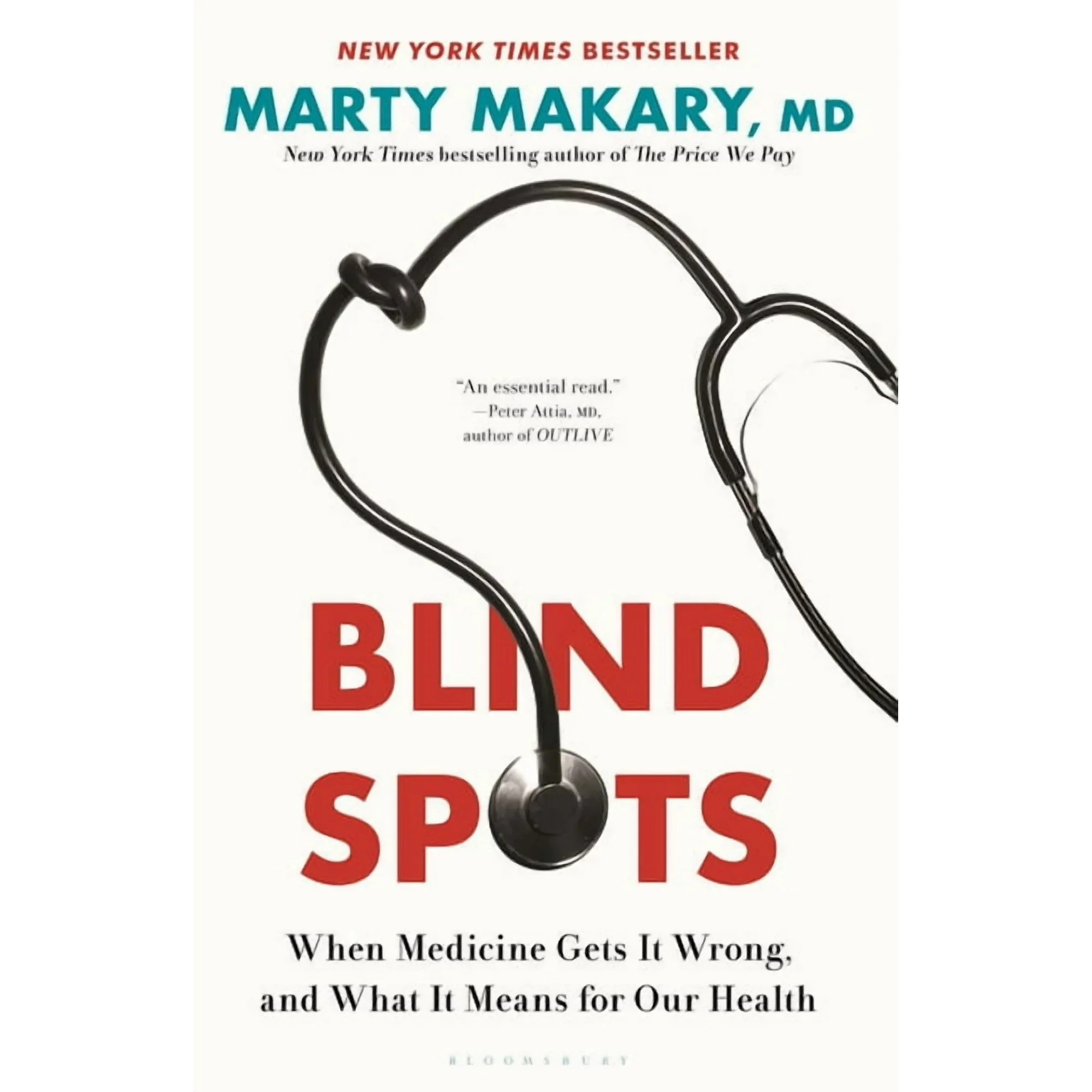
Blind Spots
by Dr. Marty Makary
Dr. Makary is a surgeon and public health researcher who has spent his career watching what happens when medical consensus hardens into dogma — when the institutions we trust to tell us the truth stop questioning their own assumptions.
The argument he makes goes well beyond medicine. It is a book about the blind spots that form in any field when expertise becomes a substitute for honest inquiry. When the accepted answer crowds out the honest question. When the cost of dissent becomes too high and the truth suffers for it.
I found this book both fascinating and sobering. It confirmed something I had observed across twenty-five years in law enforcement — that institutions, however well-intentioned, develop blind spots that become dangerous when left unexamined. The man who reads this book will think differently about the information he receives and the authorities he trusts.
Accessible, well-researched, and genuinely important.
-
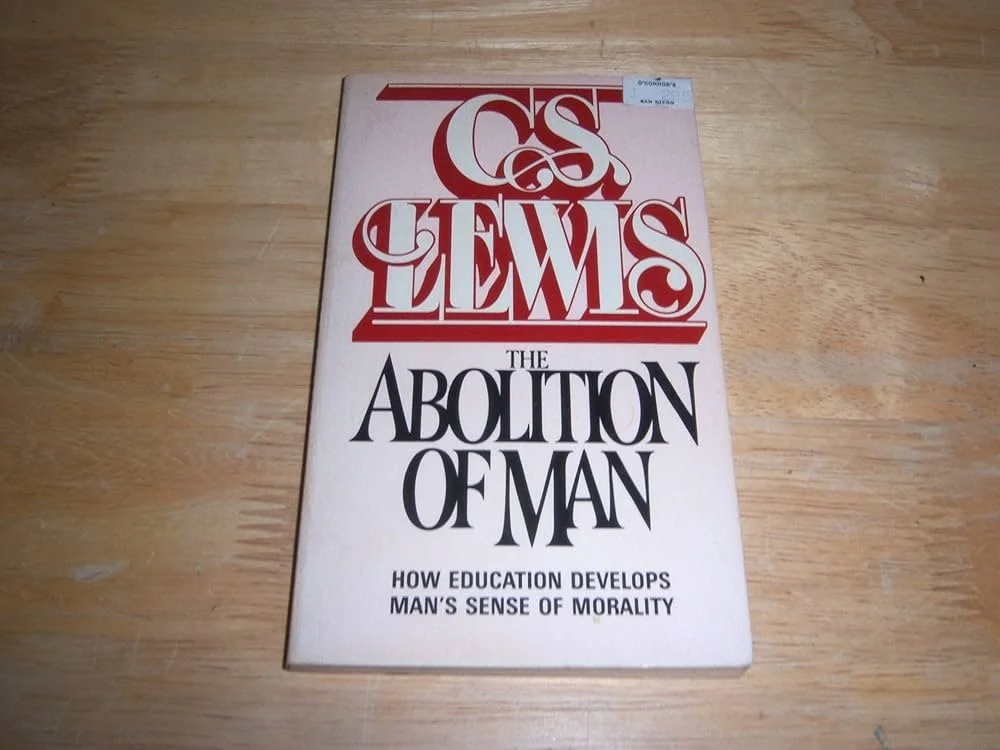
The Abolition of Man
by C.S. Lewis
Barely one hundred pages. One of the most important books written in the twentieth century.
Lewis saw something in 1943 that most people are only beginning to understand now. When you strip objective moral truth out of education and culture — when you teach men that values are merely subjective, that there is no standard outside of personal preference — you do not produce liberated men. You produce men without chests. Men who can think but cannot feel rightly. Men who are sophisticated but not good.
The argument is dense but Lewis writes with a clarity that rewards careful reading. Every page has something worth underlining.
What strikes me most is how precisely Lewis diagnosed a problem that has only deepened in the decades since he wrote. The man who reads this book will understand something about the current cultural moment that most people cannot articulate — and he will have the vocabulary to name it.
This is a book for the man who wants to understand not just what is wrong but why.
-
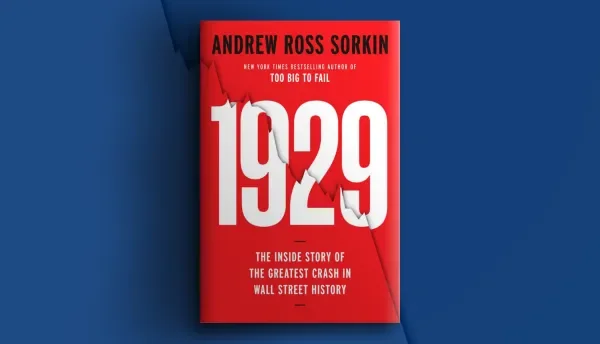
1929
by Andrew Ross Sorkin
If you want to understand how the modern financial world works — and how quickly it can come undone — this is where you start.
Sorkin traces the events leading to the financial collapse that changed everything about how economies, governments, and institutions operate. The characters are vivid. The stakes are real. And the parallels to the present moment are impossible to ignore.
What I found most valuable was not the economic history itself — though it is meticulously researched — but what the story reveals about human nature under pressure. How intelligent men in positions of enormous power can convince themselves that what they want to be true is true. How institutions fail. How confidence becomes recklessness so gradually that no one notices until it is too late.
A book about 1929 that reads like a warning written for right now.
-
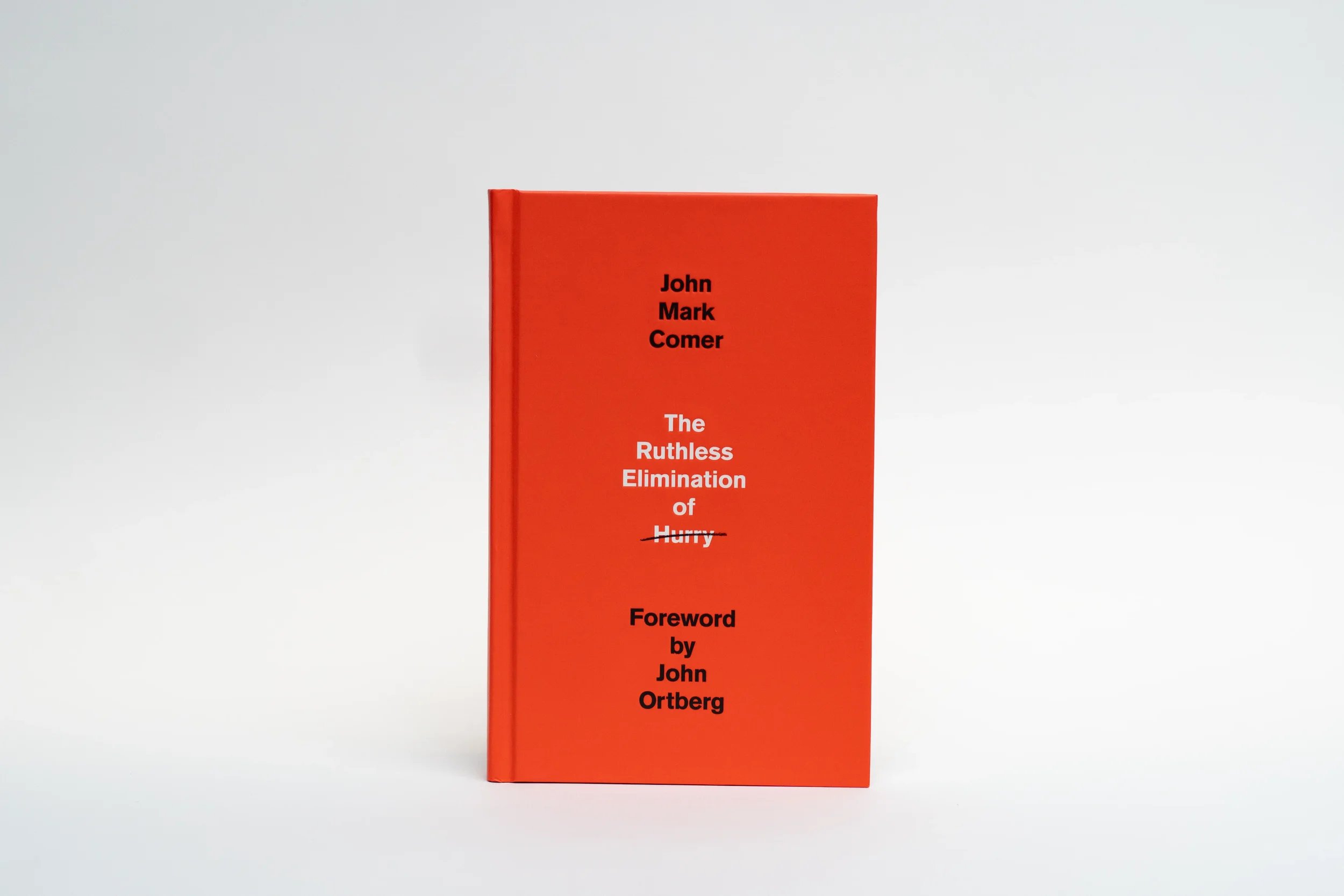
The Ruthless Elimination of Hurry
by John Mark Comer
The title alone is worth sitting with.
Comer makes the case that hurry is not just a time management problem. It is a spiritual condition — one that crowds out the very things that make a life worth living. Relationship with God. Genuine presence with the people you love. The examined life. All of these require something that the modern world is systematically destroying: unhurried time.
The book is accessible without being shallow. Comer writes with honesty about his own experience of a driven, productive, successful life that was quietly hollowing him out — and the deliberate, sometimes countercultural choices he made to recover what had been lost.
This book pairs naturally with everything we discuss in The Gentlemen's Study. While I do recommend this book, I do so hesitantly. I have disagreements with some of Comer’s theology and ideology. However, I found enough nuggets worth mining from this book that I would invite you to do the same.
Practical. Convicting. Worth your time.
-
Developing The Leader Within You
by John Maxwell
This is the book that started everything for me.
I was twenty-seven years old. Two small sons. Early in my law enforcement career. By most measures things were going reasonably well — but I hadn't yet asked the question this book forced me to ask.
Maxwell makes the point that leaders are always being watched. That the people around you — especially the ones who look to you — are paying attention to everything. Not just your decisions. Your habits. Your attitudes. The way you carry yourself when things are hard.
I thought about my two young sons. And I asked myself a question I hadn't quite asked before in those terms: what kind of man are they watching?
That question changed the direction of things. I made a decision to live with purpose — not for professional reasons, not for appearances, but because those boys deserved a father who had actually thought about what kind of man he was going to be.
That decision still echoes thirty years later.
Find this book. Read it. Ask yourself the question it asked me
-
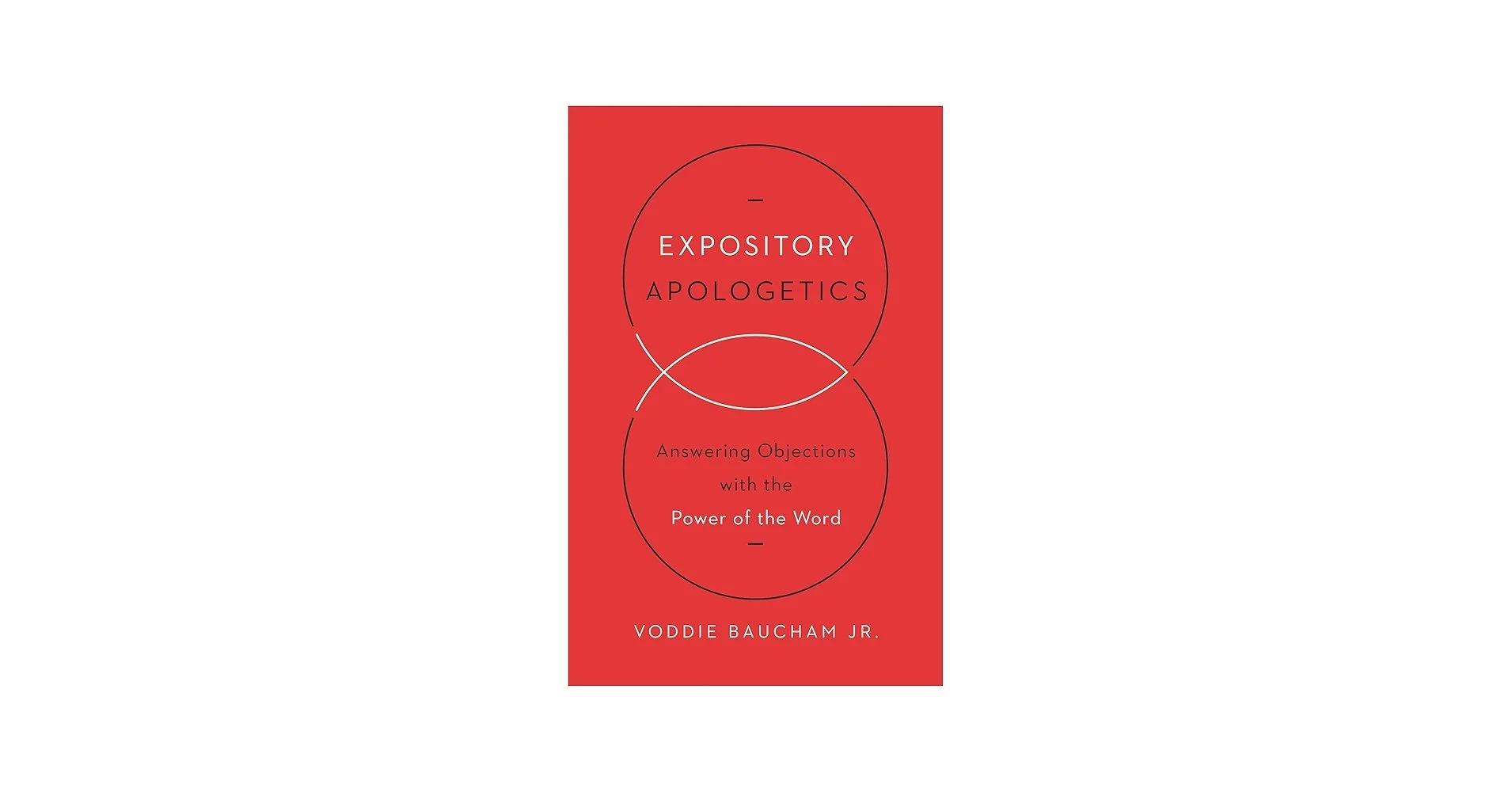
Expository Apologetics
by Voddie Baucham
There are books you read once and move on from. And then there are books you return to every year because they continue to give something new each time.
This is that book for me.
Baucham makes the case for defending the Christian faith from within Scripture itself — not by borrowing the assumptions of secular philosophy and trying to argue on its terms, but by standing firmly on the authority of the Word and reasoning outward from there. The approach is deeply Reformed, deeply serious, and deeply practical.
What sets this book apart is the combination of theological depth and accessibility. Baucham does not write for academics. He writes for the man in the pew — the man who loves his faith, wants to defend it intelligently, and needs the tools to do so without abandoning the very foundation he is trying to defend.
The doctrine is precise. The argument is clear. And the conviction behind every page is evident on every line.
I read this book every year. Every year it gives me something I missed the year before. That is the mark of a book worth owning rather than just reading.
-
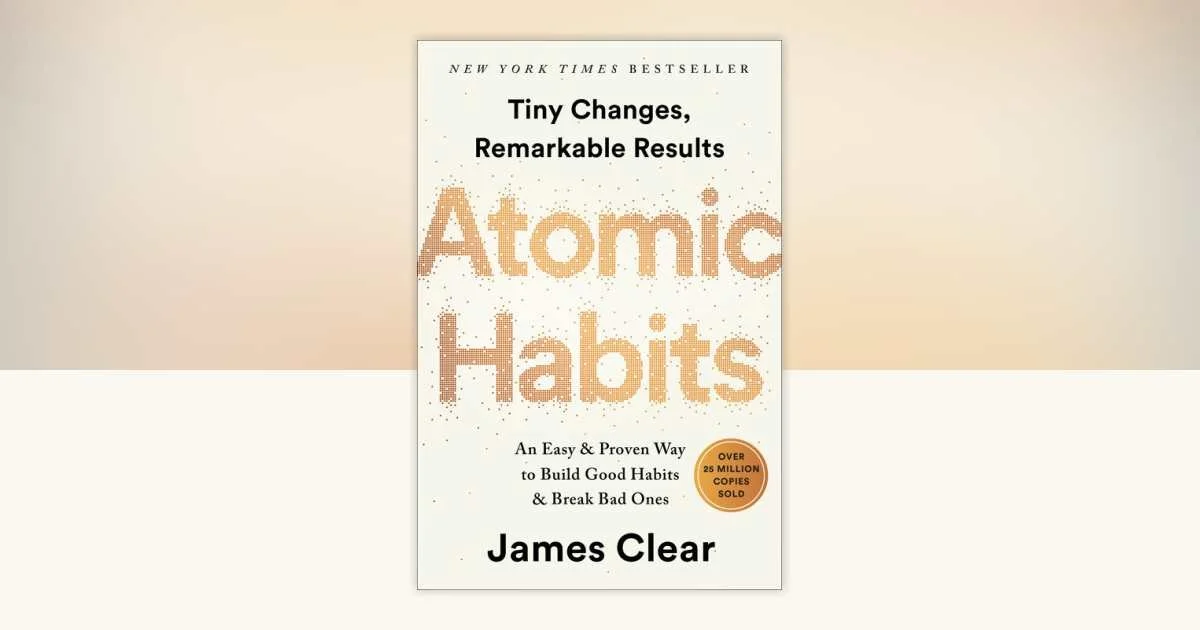
Atomic Habits
by James Clear
The central argument of this book is deceptively simple: you do not rise to the level of your goals — you fall to the level of your systems. And that single idea, properly understood and applied, has the power to change almost everything about how a man lives.
Clear builds a comprehensive framework for understanding how habits form, why they persist, and how to deliberately build the ones you want while dismantling the ones you don't. The science is solid. The practical applications are specific. And the writing is clear enough that nothing gets lost in translation between the research and the reader.
What struck me most was the compound interest argument — that small consistent improvements accumulate into extraordinary results over time, and that the reverse is equally true. Small consistent failures compound into outcomes a man never intended and can barely explain.
For the man who wants to build a reading life, a morning discipline, a practice of intentional living — this book gives you the mechanical understanding of why those things are hard to start and how to make them easier to sustain.
Practical. Evidence-based. Worth every page.
As mentioned in Episode 4 — James Clear writes: "Knowledge compounds. Learning one new idea won't make you a genius, but a commitment to lifelong learning can be transformative." That line alone is worth the price of the book.
-
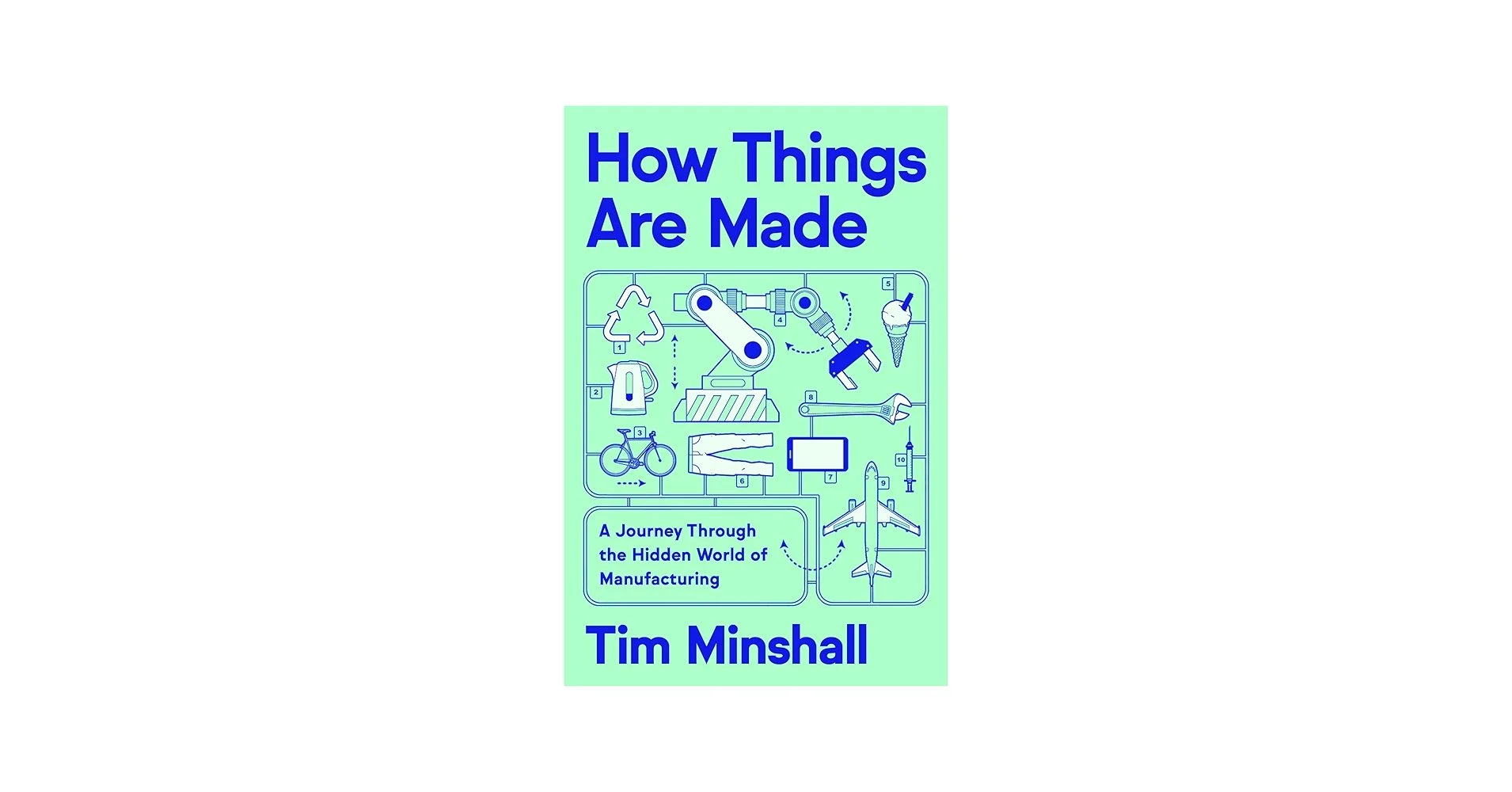
How Things Are Made
How Things Are Made Tim Minshall
Most men interact with the products of modern manufacturing every day without ever stopping to wonder how any of it actually happens. This book fixes that.
Minshall takes you behind the curtain of the modern industrial world — from the moment an idea is conceived, through the design and engineering process, into the factory, and ultimately into the hands of the consumer. The scope is remarkable. The explanations are clear without being condescending. And the overall effect is a genuine appreciation for the complexity and ingenuity that underlies almost every object in daily life.
I found this book genuinely fascinating — not because manufacturing is a passion of mine, but because the process Minshall describes reveals something about the nature of craft, precision, and the human capacity to solve enormously complex problems through sustained disciplined effort.
There is something about understanding how things are made that changes how you see the world. You stop taking objects for granted. You start noticing the thought and labor behind them. That is a perspective worth having.
Interesting, accessible, and quietly eye-opening.
-

Leuchtturm1917
This is one of the standards for use as a CommonPlace Book. With a contents page for cataloging entries and pre-marked page numbers, this one is a can’t miss
-

Cross Calais Ink Pen
A task worth doing requires a tool worth using. This is my ink pen of choice for writing in my CommonPlace Book. It’s got a solid feel in the hand with good weight. It’s not overly priced, and it has the quality and characteristics of a fine gentlemen’s writing utensil. Like I say, “Classy doesn’t have to be pricey”.
-
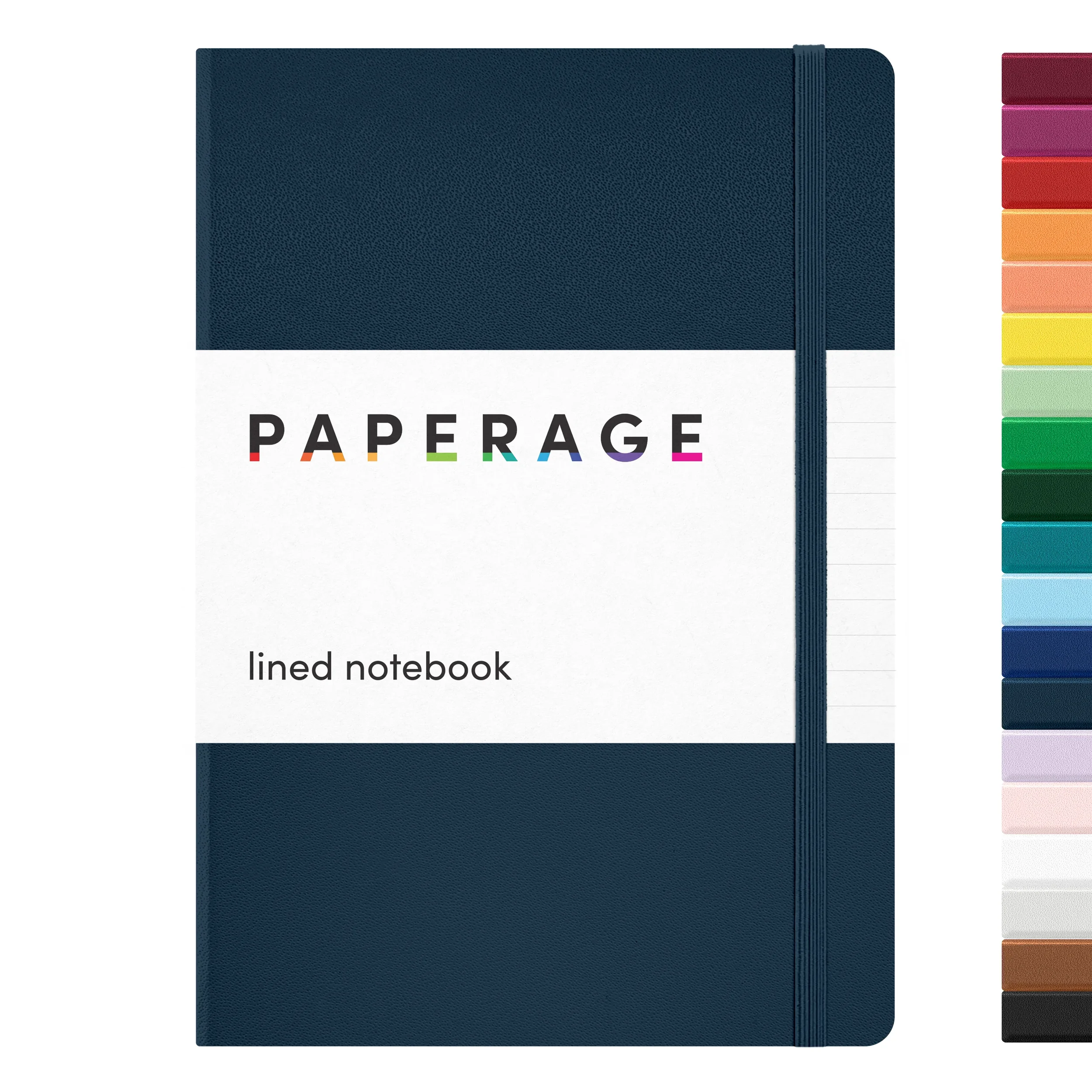
PAPERAGE Lined Journal Notebook
If you aren’t wanting to spend $25-$30 on the Leuchtturm, this is a quality choice for less than half the price. This is what I’m currently writing in as my CommonPlace Book, and it has all the quality and functionality of the higher priced alternatives.
-
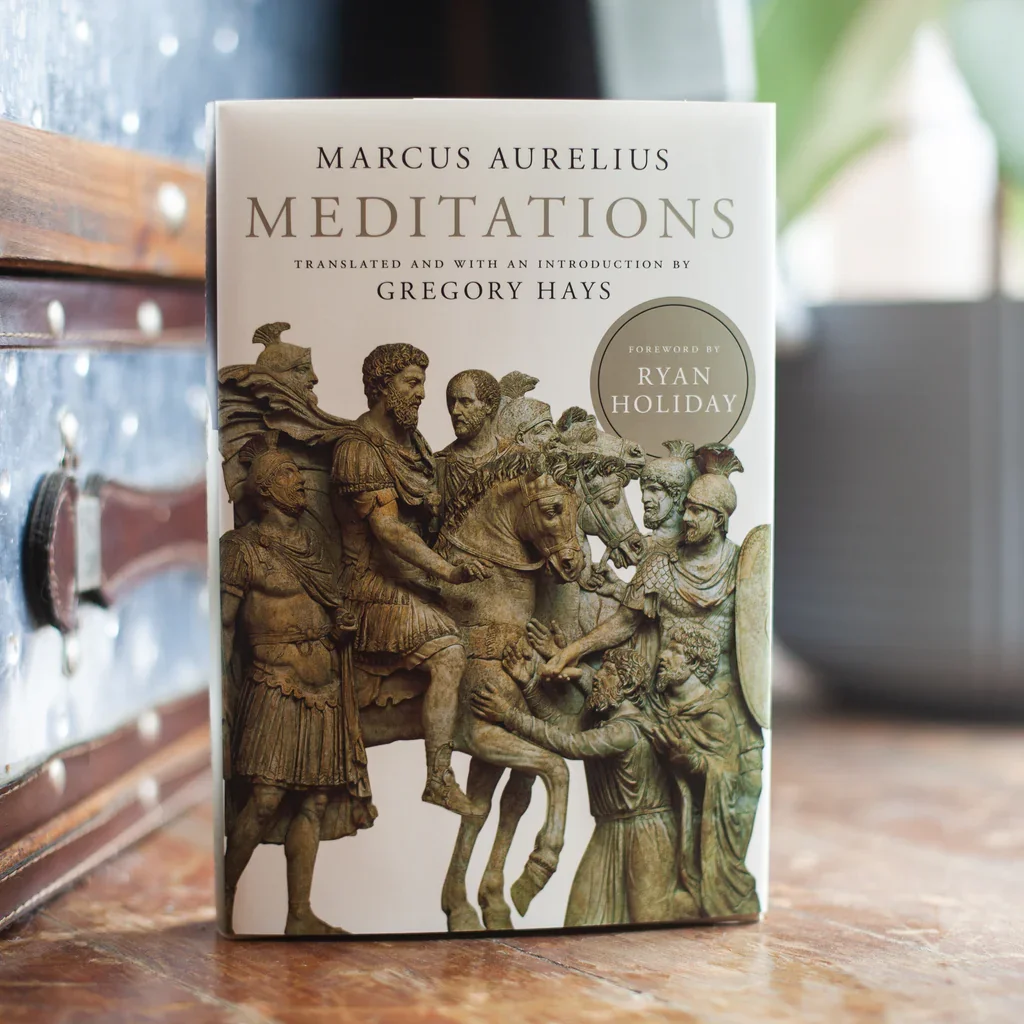
Meditations
by Marcus Aurelius
The personal thoughts of a powerful man under tremendous pressure. It was never intended to be published, yet we have this treasure at our disposal.
-
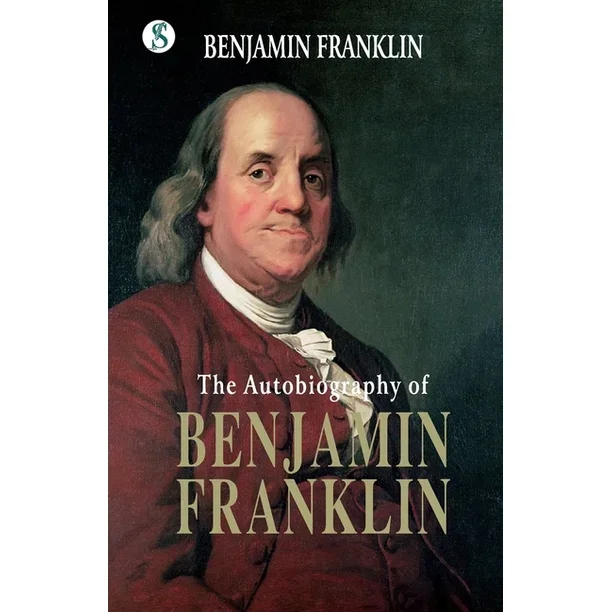
The Autobiography of Benjamin Franklin
by Benjamin Franklin
There is no better introduction to Benjamin Franklin than the one he wrote himself.
The Autobiography is one of the most readable and revealing self-portraits in the history of American letters. Franklin began writing it in 1771 as a letter to his son — a record of his life and the principles that shaped it — and returned to it in stages over the following decades, never quite finishing it. What exists is a window into one of the most extraordinary minds the American founding produced.
But what makes this book genuinely worth your time is not the history. It is the honesty.
Franklin does not write as a man congratulating himself on his accomplishments. He writes as a man who made serious mistakes, learned hard lessons, and thought carefully about what it meant to become the kind of person he wanted to be. The section on his thirteen virtues alone is worth the price of the book — a twenty-year-old man on a ship crossing the Atlantic, humbled by his own failures, pulling out paper and designing a system for becoming better. The fact that he kept that system for fifty years — imperfectly, honestly, never quite achieving the moral perfection he aimed for — makes it more compelling, not less.
He admitted the two virtues he never mastered. Order and Humility. He published that admission for anyone who cared to read it. That kind of honesty from a man of his stature is rare in any era.
I read this book while preparing Episode 10 of The Gentlemen's Study — the episode dedicated entirely to Franklin and his virtue system. It shaped that episode significantly. Read it slowly. The man who wrote it deserves that much.
-
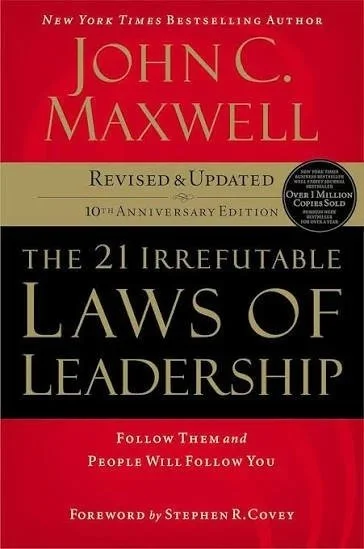
The 21 Irrefutable Laws Of Leadership
by John Maxwell
I have been reading John Maxwell since I was a young man. Developing the Leader Within You — the book I recommended in the reading episode — was the one that stopped me cold at twenty-seven and asked me a question I could not ignore. Maxwell has been a consistent voice in my life ever since.
The 21 Irrefutable Laws of Leadership is his most comprehensive statement on what leadership actually is and how it actually works. Not theory. Not inspiration. Observable, transferable laws that Maxwell has spent decades identifying, testing, and teaching to leaders in every domain.
Here is what I want to say about why this book belongs in this episode specifically. The twelve virtues are not just a personal formation project. They are the foundation of genuine leadership. Integrity, humility, sincerity, loyalty, resolve — these are not soft interior qualities that have nothing to do with a man's influence in the world. They are the bedrock on which every law in Maxwell's book ultimately rests.
The man who pursues the twelve virtues seriously will find Maxwell's laws clicking into place in a way they would not have before. And the man who reads Maxwell without the character foundation will find that the laws produce a capable performer rather than a genuine leader.
Read them together. They are more powerful that way.
-
The Honesty Crisis
by Christian Miller
Most conversations about honesty stop at the same shallow place. Don't tell a lie. That's the whole instruction most of us ever received, and it's true as far as it goes — but it doesn't go nearly far enough.
Miller digs into something deeper. Deception by omission. The impressions left uncorrected because correcting them would be inconvenient. Honesty as a matter of character running through every area of a man's life rather than a narrow rule about whether the specific sentences coming out of his mouth are technically accurate.
A man can avoid outright lies his entire life and still be fundamentally dishonest — through what he withholds, through the false impressions he allows to stand, through the carefully curated version of himself he presents while avoiding anything that would actually require a lie to maintain.
Integrity requires more than not lying. It requires the kind of thorough honesty this book is describing — honesty that runs all the way down.
-
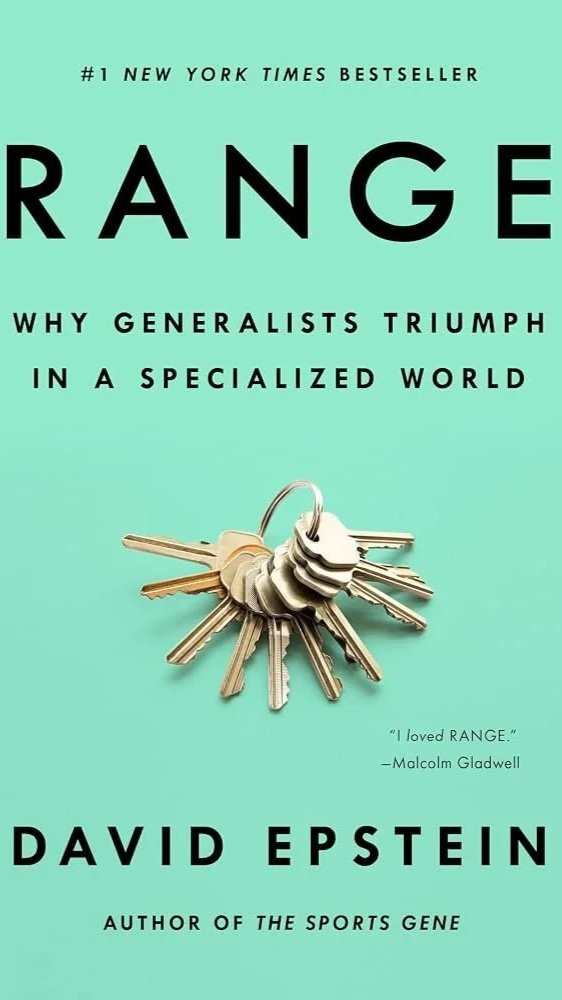
Range
by David Epstein
On the surface this is a book about why generalists — people with broad, varied experience across multiple domains — often outperform narrow specialists in a world that constantly tells us to specialize earlier and more deeply. It is genuinely one of the best books written in the last decade on learning, skill development, and career trajectory. Every man should read it for that reason alone.
But underneath the surface argument is something else worth your attention. Epstein's book is full of examples of narrow experts whose specific competence became a blind spot — men so credentialed and so deep in one domain that they lost the ability to defer to a broader range of knowledge, or even to admit, clearly and simply, that they might be wrong.
That is intellectual humility. And I would argue it is just as important as any other kind. The specialist who cannot admit the boundary of his own competence is failing in the same essential way as a leader who cannot set down power he no longer needs to hold — his identity has become too tightly fused to a position of authority for him to loosen his grip on it when the moment requires it.
Read it for the career advice. Read it again for what it teaches about the limits of expertise.
-
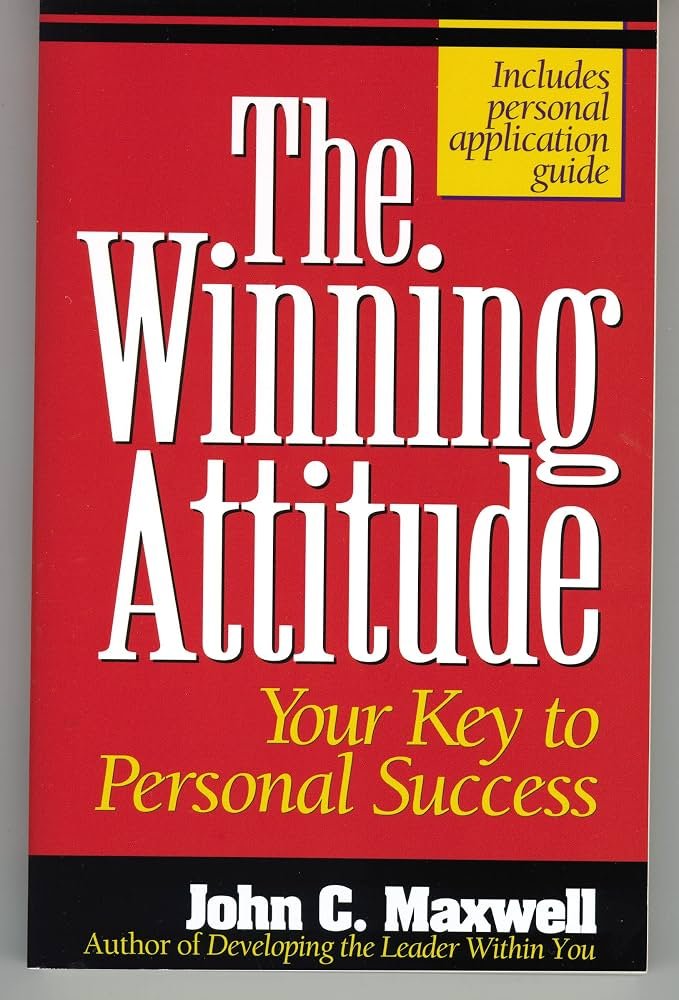
The Winning Attitude
by John Maxwell
I read this one a long time ago, and it has stayed with me since.
Maxwell's core argument is simple to state and hard to actually live: attitude is not a fixed trait a man either has or doesn't. It is a choice, made and remade daily, and it shapes far more of a man's outcomes than most of us are willing to give it credit for. We like to believe our circumstances determine our disposition. Maxwell makes the case, convincingly, that it usually runs the other way around.
He writes about choosing to see what's good, choosing to respond rather than react, choosing to build people up rather than tear them down — and every one of those choices is, at bottom, a form of the same discipline we spent an entire episode on. Not manufactured positivity. A deliberate, repeated decision about where to fix your attention.
What I appreciate most is that Maxwell never treats this as soft or sentimental. He writes about attitude with the same practicality he brings to leadership — as something that can be built, trained, and strengthened like any other discipline on this list.
I went back to it recently, years after my first read, and found things in it I had completely missed the first time. That is usually the sign of a book worth keeping on the shelf rather than passing along.
-
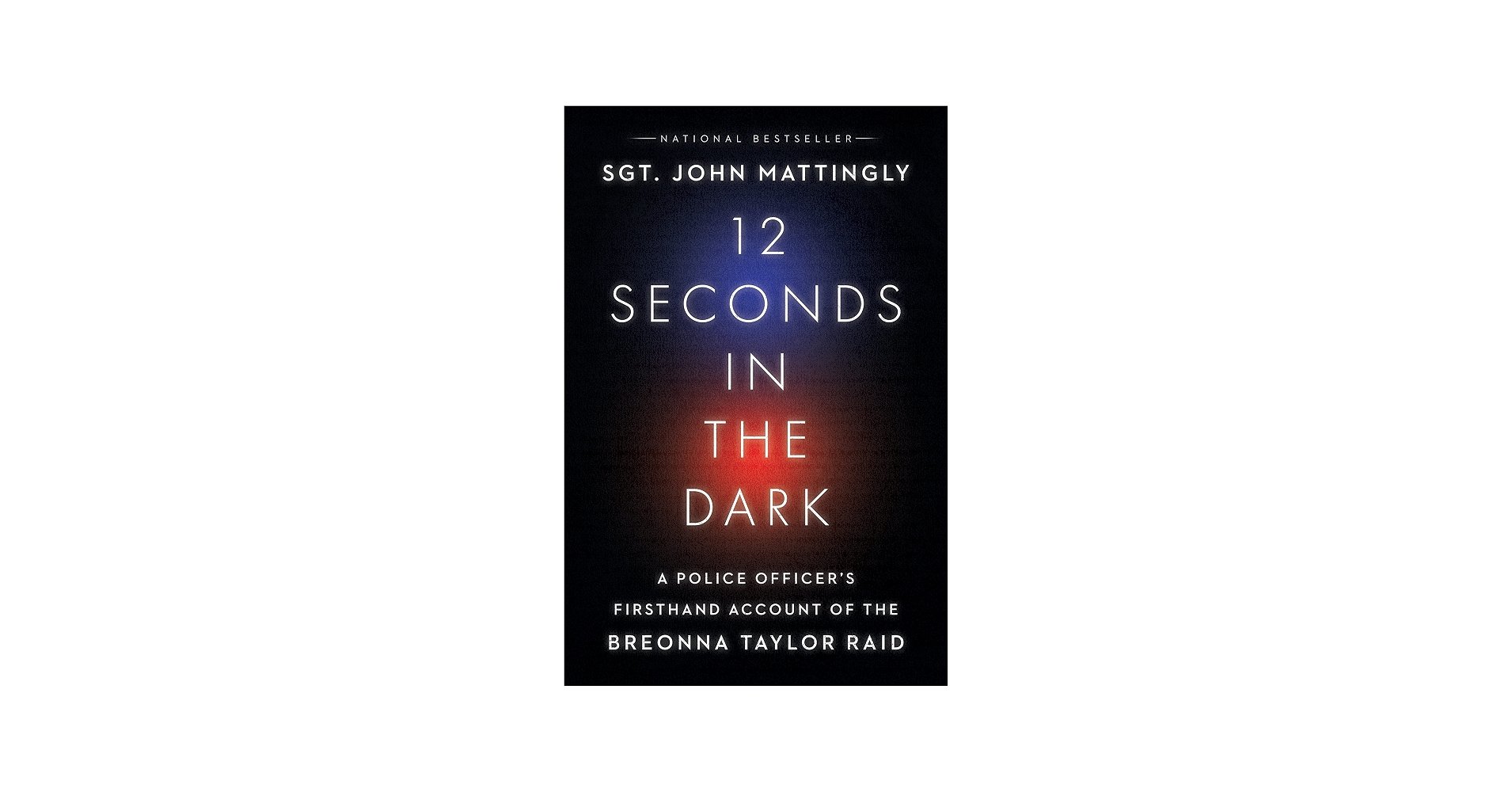
12 Seconds In The Dark
Sgt. John Mattingly
Recommended in Episode 15 — JusticeThis one is written by a working law enforcement officer, which gives it a different weight than most books on this shelf.
It's an account from inside the exact profession where the questions we spent an entire episode on get asked in real time, under real pressure, with real consequences attached to every choice a man makes. This is a firsthand account of the Breonna Taylor shooting and it’s aftermath in Louisville, Kentucky.
I'd recommend this to any man, in or out of law enforcement, who wants to understand what it actually costs to act rightly when the moment in front of you doesn't offer any time to think it over. That pressure isn't unique to a badge. Every man faces some version of it — he just usually gets more than twelve seconds to decide.